An entry to our 2019 Writing Competition, Peter Cunnington travelled on our 'The Best of Ethiopia' tour.
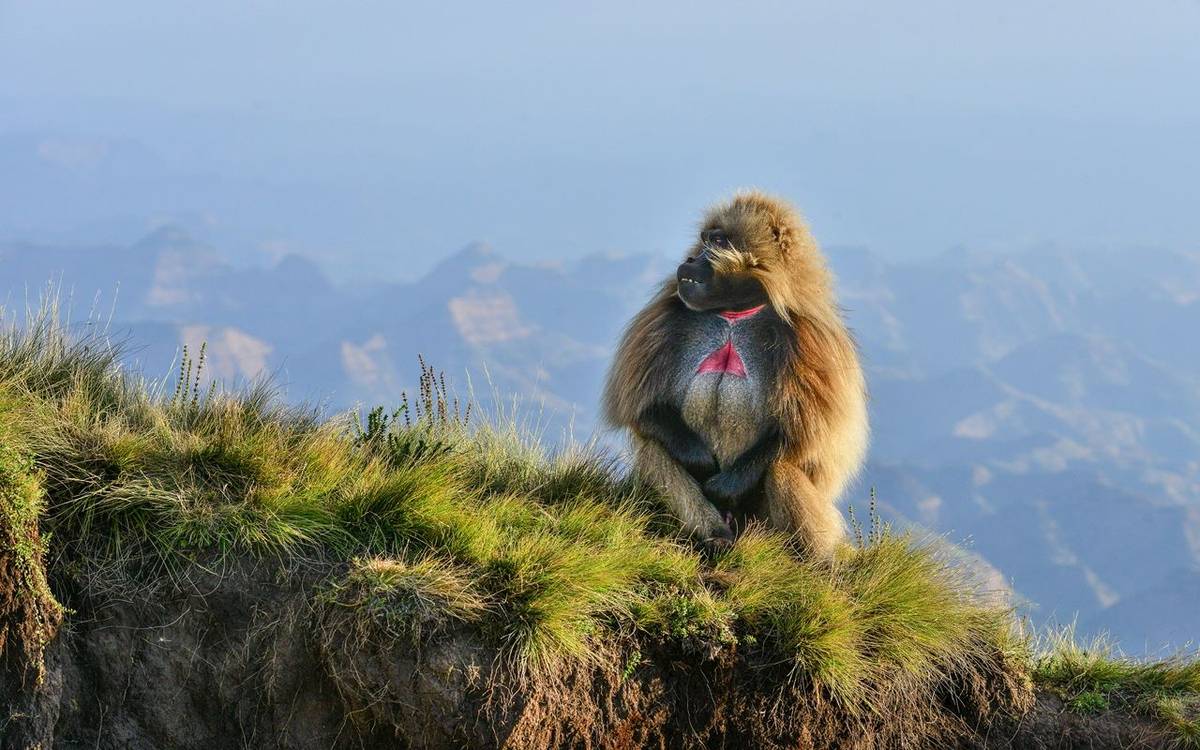
Having arrived at the Simien Mountain Lodge in Ethiopia (the highest lodge in Africa), a little tired after a long drive from Gondar and slightly breathless at being over 10,000 feet, a welcome rest after lunch might appear preferable to a long walk in the afternoon sun. How fortunate, therefore, to encounter a large troop of endemic Gelada Baboons near the edge of an escarpment, not far from the lodge. There must have been upwards of a hundred individuals present, from tiny infants clinging to their mothers, to the largest males with their impressive capes and “gelada grins” – as the typical lip flip has become known. All the adults, both male and female, displayed the colourful pink chests which have led to Geladas being named as the “bleeding heart monkeys”.
We approached slowly to within a few yards and sat down quietly on the edge of the group, without them taking any apparent notice of us as they continued feeding intently on grasses and plant roots, grooming each other intimately or just sitting upright amongst the typical grassland steppe vegetation. As we sat there relaxing in the sunshine, the peace and tranquillity of the scene enveloped our senses and the normal life of the Geladas played out all around us. A few youngsters played in a nearby tree, performing somersaults in the branches and occasionally falling off. An adult couple who had been grooming intently then stood up and began mating. Very occasionally the silence was disturbed as a noisy squabble erupted amongst a gang of younger, bachelor males with much screaming, wailing and barking, and usually ending in a headlong chase towards some distant cover. The majority, however, simply continued with their meticulous searching for the more juicy underground stems, leaving the excavated area, commonly known as a “Gelada Field”, with clear evidence of their presence.
We remained in this idyllic place for over an hour, totally immersed in observing the normal daily life of Geladas and a world away from our own urban existence. As the minutes ticked by one could feel a real sense of calm relaxation spreading beyond the usual sense of enjoyment that comes from studying wildlife in its natural habitat; but now so different from the pent up nervous tension and excitement which comes with silently watching a more dangerous species, such as an apex predator, stalking its prey or devouring a kill. Back home, whilst relaxing in comfort, I can recall this unique experience, visualise the scene in minute detail, and recapture the overall sense of peacefulness.
The next day, as dusk approached, we walked slowly among a different band of Geladas as they headed down a slope towards trees on a cliff-top where they would spend the night, safely out of reach of potential predators. Again our proximity to the Geladas and their acceptance of our presence was a truly moving experience that we felt privileged to have shared and did not want to end. Indeed it was tempting to contemplate one last visit the following morning to complete our observation of the entire daytime life cycle of these endearing animals. But we had other species to seek in their own unique habitats!
Read more about our 'The Best of Ethiopia' holiday.
About the Author