The Serengeti or the Okavango? Kruger or South Luangwa? Our safari specialists compare Africa's great wildlife destinations, and a few beyond Africa, to help you choose the right safari for you.
The word 'safari' conjures a familiar picture: open-topped vehicles on dusty tracks, great herds of Blue Wildebeest and Plains Zebra, a Leopard draped along an acacia bough. Yet behind that picture lies an astonishing variety of experiences. A dry-season safari in Zambia's South Luangwa feels nothing like a canoe drifting through Botswana's Okavango Delta, and neither resembles the migration herds pouring across the plains of the Serengeti or a night drive in search of Aardvark in South Africa's Karoo. Choosing where to go is the most important decision you will make, and the one most worth getting right.
We have been organising wildlife holidays since 1986, and Africa has been at the heart of our programme for decades, from classic safaris in Kenya and Tanzania to pioneering trips in search of Ethiopia's endemic wildlife. Today we run expert-led safaris across the continent, including Botswana, Zambia, Kenya, Tanzania, South Africa and Namibia, plus gorilla and chimpanzee holidays and trips to some of Africa's least-visited corners. Our tours are led by expert naturalist guides, many of them outstanding local specialists, and are designed for people who want to understand the wildlife they see.
'The first question we ask anyone planning a safari isn't "where do you wish to go", but "which species are at the top of your wildlife wish-list". We want to know what would make the holiday unforgettable for you. That could be seeing big cats and big game, it could be birding, or it could be night drives in search of rarely seen creatures like Aardwolf. Equally, your priority might be to enjoy a walking safari, or having each sighting to yourself. Once we know what matters most to you, the right destination usually picks itself.'
Paul Stanbury, Operations Manager
The short answer
There is no single best safari destination, only the best one for you. For a first safari with the greatest density of big game, Tanzania and Kenya are hard to beat; for wilderness, water and walking, look to Botswana and Zambia; and for great apes, head to Uganda or Rwanda. The table below matches common wishes to the destinations we would recommend.
| If you most want... | Consider | Why |
|---|---|---|
| A first safari with abundant big game | Tanzania, Kenya, South Africa | Open plains, high game densities and excellent guiding |
| The Great Migration | Tanzania (calving), Kenya (river crossings) | Over a million Blue Wildebeest on the move |
| Mountain Gorillas and Chimpanzees | Uganda, Rwanda | Home to habituated Mountain Gorilla families and the best Chimpanzee tracking |
| Remote wilderness and water-based safaris | Botswana & Zambia | Boat trips in the Okavango Delta and Lower Zambezi, and low visitor numbers |
| Walking safaris and Leopards | Zambia, Zimbabwe | South Luangwa and Mana Pools are Africa's great walking parks |
| Landscapes, photography and dark skies | Namibia | Etosha's waterholes, Namib dunes and superb stargazing |
| Rare and nocturnal mammals | South Africa | Night drives for Aardvark, Aardwolf and Black-footed Cat |
| A rainforest adventure | Republic of the Congo, Gabon | Western Lowland Gorillas and Forest Elephants |
| Big cats beyond Africa | India, Sri Lanka, Brazil | Tigers, Leopards and Jaguars |
East Africa: the classic safari

Lions, Amboseli, Kenya
African Elephants
East Africa is where the modern safari was born, and for sheer numbers of animals on open plains it remains hard to beat. It also offers something southern Africa cannot: the chance to combine big game with Mountain Gorillas and Chimpanzees on a single holiday.
Tanzania
Best for: the Great Migration, the Ngorongoro Crater and a first safari.
Tanzania holds some of the most famous wildlife landscapes on Earth. The Serengeti's short-grass plains host the Great Migration, when over a million Blue Wildebeest, Plains Zebras and gazelles follow the rains in a vast clockwise loop across Tanzania and Kenya. Early in the year, the herds gather in the southern Serengeti to give birth, drawing Lions, Cheetahs and Spotted Hyenas to the calving grounds. Nearby, the Ngorongoro Crater shelters an extraordinary concentration of wildlife within its spectacular caldera, including Black Rhino, Lions and huge herds of grazers. Tarangire National Park, famous for its large African Elephant herds, tree-climbing Lions and giant baobabs, and Lake Manyara complete the northern circuit.
Our Tanzania's Highlights tour is a 15-day birdwatching and mammal-viewing safari through Arusha, Tarangire, Ngorongoro, Lake Manyara and the Serengeti.
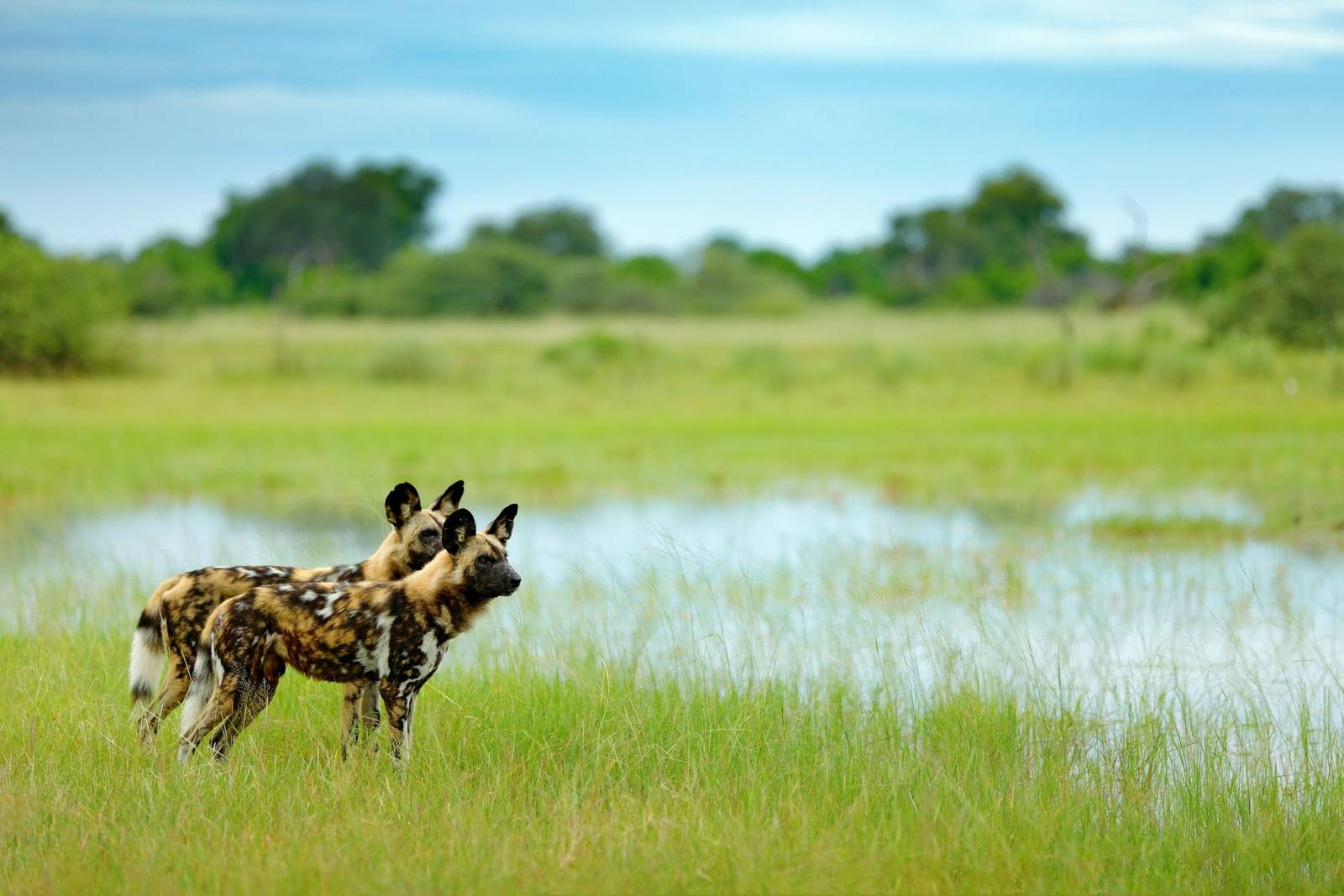
Southern Tanzania: Ruaha and Nyerere. Away from the famous northern circuit, southern Tanzania offers vast wilderness with very few visitors. Nyerere National Park, created from much of the former Selous Game Reserve, supports one of Africa's most important populations of African Wild Dogs, alongside Lions, African Elephants and superb birdlife, including Northern Carmine Bee-eater and Pel's Fishing Owl. Ruaha National Park, famed for its high density of African Elephants and predators, holds both Greater and Lesser Kudu and also sees few tourists. Our Tailormade team would be delighted to create a bespoke itinerary combining Nyerere and Ruaha National Parks, perhaps with a relaxing stay in Zanzibar to round off your holiday.
Kenya
Best for: Classic safari landscapes, big cats and Indian Ocean beaches.
From around July to October, the Blue Wildebeest herds pour into the Maasai Mara, producing the dramatic Mara River crossings seen on so many wildlife documentaries. The Mara is also one of Africa's finest places for big cats all year round, with Lions, Leopards and Cheetahs regularly seen. Beyond the Mara, the Rift Valley lakes such as Lake Nakuru and Lake Naivasha add superb birdlife.
For photographers, our Kenya's Maasai Mara – Photo Safari is limited to six guests and led by naturalist photographer John Haskew, who lives full time in the Mara.
Northern Kenya: Samburu and Laikipia. North of the Equator, Kenya's arid country holds a suite of animals you won't see elsewhere in Kenya, such as Grevy's Zebra, Reticulated Giraffe and Vulturine Guineafowl. Samburu's Doum Palms and Ewaso Nyiro River make it one of Kenya's most scenic reserves, and it is the opening stop on our 2-week Kenya Highlights safari. On the Laikipia Plateau, a patchwork of private ranches and conservancies protects around half of Kenya's Black Rhinos, packs of African Wild Dogs and, famously, a small number of melanistic (black) Leopards. Our 11-day Laikipia: Kenya's Heartland goes in search of them.
For the migration itself, our Kenya's Maasai Mara Migration holiday is timed for the herds' arrival in the Mara.
Uganda
Best for: Mountain Gorillas, Chimpanzees and birdwatchers.
Uganda is a naturalist's country of misty forests, papyrus swamps and savannah, with more than 1,000 bird species recorded. Bwindi Impenetrable National Park protects roughly half of the world's Mountain Gorillas, and Kibale Forest is one of the most reliable places in Africa to track Chimpanzees. Add the prehistoric-looking Shoebill in Mabamba Swamp, the tree-climbing Lions of Queen Elizabeth National Park and boat trips along the Kazinga Channel, and Uganda offers remarkable variety. A standard gorilla permit in peak seasons currently costs US$800 per person, around half the price of Rwanda's permits.
Try our Uganda – in Search of the Shoebill tour, a 10-day birding tour with an optional Bwindi gorilla extension, or our 14-day Uganda – Mammals & Mountains safari.
Rwanda
Best for: a shorter, more accessible gorilla trek.
Rwanda, the 'Land of a Thousand Hills', is often called the primate capital of Africa. Volcanoes National Park, where Mountain Gorillas and Golden Monkeys live on the slopes of the Virunga volcanoes, is only a few hours by road from Kigali. Nyungwe Forest shelters Chimpanzees and as many as 13 primate species. Permits are more expensive (US$1,500 per person) and numbers are more tightly limited – part of Rwanda's high-value, low-volume approach to tourism. Akagera National Park adds a savannah safari with the Big Five.
Can't choose? Our 22-day Best of East Africa tour combines Rwanda, Uganda, Kenya and Tanzania, from Chimpanzees and Golden Monkeys to the plains of the Maasai Mara and Serengeti.
'Spending an hour with a gorilla family is without doubt one of the most incredible experiences in the natural world. Mountain Gorillas are restricted to just two populations, one in the Bwindi Impenetrable Forest of Uganda, and the other in the Virunga Mountains bordering Rwanda, Uganda and the Democratic Republic of Congo (DRC). When deciding between Uganda and Rwanda, price is a big factor: trekking permits are already expensive, and the price in Rwanda is over double that in Uganda. Both countries have a huge amount to offer, though for keen wildlife enthusiasts, Uganda gives you so much more alongside the gorillas, from Chimpanzees in Kibale to Shoebills and tree-climbing Lions.'
Georgie Dodds, Tailormade Holidays Manager
Southern Africa: wilderness, water and walking
Leopard, South Luangwa National Park
Aardvark, South Africa
Southern Africa's great parks are generally quieter than East Africa's headline reserves, and they offer a wider range of ways to explore: on foot, by boat, by dugout canoe and after dark. Most are at their best in the dry winter months, from around June to October, when animals concentrate at dwindling waterholes and rivers.
Botswana
Best for: the Okavango Delta, wilderness and low-density tourism.
Botswana is one of Africa's great wilderness destinations, covering an area roughly the size of France but with a population of just over two million people. Seasonal rains in the Angolan highlands take months to reach Botswana, transforming around 15,000 square kilometres of the Kalahari into a mosaic of channels, islands and floodplains. Remarkably, the waters arrive during Botswana's dry season, attracting large concentrations of wildlife, including African Elephant, Cape Buffalo, Lion and African Wild Dog. Travel by mokoro (a traditional dugout canoe) is one of Africa's most peaceful wildlife experiences, while Chobe National Park is famous for its huge African Elephant herds.
Our 14-day Botswana's Highlights tour includes a 9-night mobile camping safari from Chobe to the Okavango and a visit to the Victoria Falls, whilst our 10-day Botswana's Desert & Delta (Mammals) and Desert & Delta (Birds) tours focus on Khwai and Moremi.
'Gliding through Botswana's Okavango Delta in a mokoro, hearing the sound of the pole in the water, surrounded by bird song and the calling of reed frogs, you experience Africa in a completely different way. It's the perfect contrast to the big plains of East Africa.'
Dan Lay, Operations Manager
Zambia
Best for: walking safaris, Leopards and an authentic, uncrowded bush experience.
Zambia's South Luangwa National Park is one of our favourite game reserves in Africa and is widely regarded as the home of the walking safari. The Luangwa River is thick with Hippos and Nile Crocodiles, the park has a well-deserved reputation for Leopards, including on night drives, and it hosts endemic Thornicroft's Giraffe. Late in the dry season, colonies of Southern Carmine Bee-eaters turn the riverbanks crimson. Lower Zambezi National Park, with canoeing along the Zambezi, is another highlight.
For a special stay, Zambia in Style spends seven nights at Chikunto Safari Lodge overlooking the Luangwa River, and our tours to South Luangwa offer outstanding value.
South Africa
Best for: value, variety, rare mammals and combining safari with the Cape.
South Africa offers a wide range of safari experiences, from classic Big Five reserves to remote wilderness areas and diverse coastal habitats. The Kruger National Park and its neighbouring private reserves deliver the Big Five and superb birding, with excellent roads and accommodation, making it an ideal first safari. South Africa also holds the world's largest numbers of wild White and Black Rhinos. Beyond Kruger, the Kgalagadi Transfrontier Park is home to Meerkats and black-maned Kalahari Lions, whilst the Cape adds African Penguins, Southern Right Whales and the extraordinary fynbos flora.
Our 10-day South Africa: Kruger (Mammals) spends six nights in Kruger. For seasoned safari-goers, South Africa's Rare Mammals goes in search of Aardvark, Aardwolf, Brown Hyena and Black-footed Cat, with night drives on private land where they are permitted.
Namibia
Best for: dramatic desert landscapes, waterhole watching and dark skies.
Namibia combines wildlife with some of the most spectacular scenery in Africa. In Etosha National Park, a vast salt pan fringed by waterholes, the dry season brings a steady procession of African Elephants, Black Rhinos, Lions, Southern Giraffes and antelope to drink, often within easy view. Add the towering dunes of the Namib, desert-adapted wildlife and some of the darkest skies on Earth, and Namibia is ideal for those who enjoy landscape and photography as much as wildlife-viewing.
Our Namibia Night and Day tour pairs daytime wildlife with telescope sessions under the Milky Way, and our 17-day Namibia, Botswana & Zambia: Etosha to the Victoria Falls tour covers three countries in the green season.
Zimbabwe & Malawi
Best for: experienced travellers seeking quieter parks.
Zimbabwe offers excellent wildlife-viewing away from some of Africa's busier safari destinations. Hwange National Park is known for its large African Elephant herds, while Mana Pools, along the Zambezi River, is particularly rewarding for walking safaris and canoeing. The spectacular Victoria Falls provide another highlight. Zimbabwe can be explored on a bespoke holiday through our Tailormade team or combined with neighbouring countries.
Malawi offers a gentle, intimate safari. Liwonde National Park straddles the palm-lined Shire River, where boat safaris pass Hippos, African Elephants and nesting birds, and the chance of Pel's Fishing Owl and Böhm's Bee-eater are among the highlights. Malawi combines beautifully with Zambia's South Luangwa National Park.
Beyond the classics
Ethiopian Wolf, Bale Mountains
Ring-tailed Lemurs, Madagascar
If you prefer to venture beyond the well-known safari circuits, Africa has plenty of rewarding destinations to explore.
'If you've already experienced a classic African safari, you'll no doubt be itching to return to the continent and explore a new part of it! Watching an Ethiopian Wolf hunt across the Sanetti Plateau, or a gorilla family feeding at the edge of a Congo bai, is every bit as thrilling as the Serengeti, and you'll often be able to enjoy having these wildlife sightings all to yourself.'
Alison Steel, Operations Manager
Ethiopia: wolves on the roof of Africa
Ethiopia is unlike anywhere else in Africa, with a remarkable blend of scenery and endemic wildlife. In the Bale Mountains, the grassy Sanetti Plateau is the best place in the world to see the endangered Ethiopian Wolf hunting Giant Mole Rats, alongside Mountain Nyala and Menelik's Bushbuck. Ethiopia has been a much-loved part of our programme since our early years, and our Ethiopia: A Wildlife Photography Tour is guided by a local leader who has led more than 100 Naturetrek tours in the country.
Republic of the Congo and Gabon: rainforest safaris
Central Africa offers a very different safari experience, exploring dense rainforest, open savannah and swampy forest clearings known as bais, where wildlife gathers to feed. In the Republic of the Congo, Odzala-Kokoua National Park protects Western Lowland Gorillas, Forest Elephants and 11 species of diurnal primate. Our 11-day Congo: Rainforest Wildlife of Africa's Hidden Heart tour stays at three camps, including Ngaga Camp, a base for gorilla tracking. Neighbouring Gabon, often called 'Africa's Last Eden', has 13 national parks. Our pioneering 15-day Gabon: Africa's Last Eden tour explores its forests and coastlines in search of Western Lowland Gorillas and Chimpanzees, including in Loango National Park. These trips involve heat, humidity and muddy trails, but reward adventurous naturalists with the chance to explore some of Africa's least-visited wildlife habitats.
Madagascar: a world apart
Madagascar is not a big game destination, but for many naturalists it is the most extraordinary wildlife holiday of all. Isolated from mainland Africa for millions of years, it is home to more than 100 species of lemur found nowhere else, from the Indri, whose eerie dawn chorus echoes through the rainforest of Andasibe-Mantadia, to mouse lemurs small enough to sit in an egg-cup. Kirindy Forest is the most reliable place to see the Fossa, the island's top predator, whilst the spiny forests of the south hold dancing Verreaux's Sifakas and Ring-tailed Lemurs. Add chameleons, leaf-tailed geckos and endemic bird families such as vangas and ground-rollers, and Madagascar makes a fascinating contrast to a savannah safari. Excursions here are mainly on foot rather than by vehicle, often at night. Our 2-week Madagascar's Lemurs tour is our most popular itinerary on the island, whilst Madagascar's Mammals focuses on Kirindy, Berenty and Andasibe.
Safaris beyond Africa
Tiger, Kanha National Park
Jaguar, Pantanal
Some of the world's most exciting wildlife encounters take place far beyond Africa's savannahs. From tracking Tigers through India's forests to watching Jaguars along the rivers of Brazil's Pantanal, these destinations offer distinctive safari experiences shaped by their own landscapes, wildlife and conservation challenges.
India for Tigers. India's central reserves offer some of the best Tiger-watching in the world. Naturetrek ran the first overseas tour to India focused exclusively on Tigers, and our Tiger-watching holidays remain among our most popular holidays.
Nepal for Tigers, rhinos and birds. In Nepal, our own Koshi Camp and Suklaphanta Wildlife Camp give access to reserves few visitors ever see, alongside Chitwan's Greater One-horned Rhinos.
Sri Lanka for Leopards and Asian Elephants. Sri Lanka combines Leopards in Yala, Asian Elephant gatherings and whale-watching in a compact island.
Brazil for Jaguars. In Brazil's Pantanal, boat-based searches along the rivers now produce remarkably reliable Jaguar sightings. See our various Jaguar-watching holidays.
Where to see Africa's most-wanted wildlife
If there's a particular animal you've always wanted to see, this is a good place to start. Our guide highlights the destinations where each species is most reliably encountered, along with the tours that take you there. Wildlife sightings can never be guaranteed, but choosing the right destination and season can greatly improve your chances.
| Species | Best places to look | Try |
|---|---|---|
| Lion | Maasai Mara and Serengeti; Okavango Delta; tree-climbing Lions in Queen Elizabeth National Park; black-maned Kalahari Lions in the Kgalagadi | Tanzania's Highlights, South Africa's Rare Mammals, Go Slow in Kenya's Maasai Mara |
| Leopard | South Luangwa (especially on night drives); Kruger and its private reserves; Maasai Mara; black Leopard in Laikipia | Zambia in Style, Laikipia: Kenya's Heartland |
| Cheetah | Serengeti short-grass plains; Maasai Mara; Laikipia; Kgalagadi; Namibia | Kenya's Maasai Mara Photo Safari |
| Serval | Ngorongoro Crater; Serengeti; Maasai Mara | Tanzania's Highlights |
| African Wild Dog | Nyerere and Ruaha; Okavango and Khwai; Laikipia; Kruger; Mana Pools | Botswana's Wild Dogs, , Tailormade Tanzania |
| Black Rhino | Ngorongoro Crater; Etosha; Laikipia conservancies | Namibia, Botswana & Zambia, Laikipia - Kenya's Heartland |
| White Rhino | Kruger and South African reserves; Lake Nakuru; Laikipia | South Africa: Kruger (Mammals), Laikipia - Kenya's Heartland |
| African Elephant | Chobe; Ruaha; Tarangire; Hwange; Amboseli; Tsavo | Botswana's Highlights, Tailormade Kenya |
| The Great Migration | Serengeti and Maasai Mara | Kenya's Maasai Mara Migration |
| Mountain Gorilla | Bwindi (Uganda); Volcanoes National Park (Rwanda) | Uganda: Shoebills to Gorillas (extension), Uganda - Mammals and Mountains, Tailormade Rwanda |
| Western Lowland Gorilla | Odzala-Kokoua (Congo); Loango (Gabon) | Congo: Rainforest Wildlife |
| Chimpanzee | Kibale Forest (Uganda); Nyungwe (Rwanda) | The Best of East Africa, Uganda - Mammals and Mountains |
| Ethiopian Wolf | Bale Mountains | Ethiopia: A Wildlife Photography Tour |
| Aardvark, Aardwolf and Black-footed Cat | Private reserves of South Africa's Northern Cape, on night drives | South Africa's Rare Mammals |
| Shoebill | Mabamba Swamp (Uganda) | Uganda: Shoebills to Gorillas |
| Carmine Bee-eaters | South Luangwa (Southern); Nyerere (Northern) | Zambia in Style, Tailormade Tanzania |
| Lemurs and Fossa | Andasibe-Mantadia, Kirindy and Berenty (Madagascar) | Madagascar's Mammals |
When to go
As a general rule, the dry season is best for game-viewing: vegetation thins, animals gather around water sources and roads are easier to navigate. The wetter 'green season' offers its own rewards, though, including newborn animals, migrant birds in breeding plumage, lush scenery, fewer vehicles and often lower prices. Seasons vary from year to year, so treat the months below as a guide.
| Destination | Peak game viewing | Also worth considering | Highlights by season |
|---|---|---|---|
| Tanzania | June to October | January to March | Migration calving in the southern Serengeti early in the year |
| Kenya | July to October | December to February; June & November | Migration herds and river crossings in the Maasai Mara |
| Uganda and Rwanda | July to October; December to February | June & November | Drier forest trails for gorilla and Chimpanzee tracking |
| Botswana | June to October | November to March (green season) | Okavango floods peak in the dry winter months |
| Zambia | June to October | November (early rains) | Late dry season brings Southern Carmine Bee-eater colonies |
| South Africa (Kruger) | May to October | Year round | Green season brings newborns and migrant birds |
| Namibia | June to October | November to April (green season) | Etosha waterholes at their busiest late in the dry season |
| Ethiopia | October to March | Drier weather in the highlands and Bale Mountains | |
| India (Tigers) | February to May | October to January | Most tiger reserves close their core zones during the monsoon season |
| Brazil (Pantanal Jaguars) | June to October | Low water levels concentrate Jaguars along the riverbanks |
Timing tip: our specialists plan departures around these seasons, and some of our tours are deliberately timed for the green season to make the most of the birdlife. If there's a particular wildlife spectacle you would love to see, our Tailormade team can help plan your trip around the best time to experience it.
Choosing your style of safari
How you explore shapes what you see almost as much as where you go.
Vehicle safaris. Morning and afternoon game drives are the backbone of most safaris, timed for the cooler hours when animals are most active. Open-sided vehicles are widely used across southern and East Africa, alongside pop-top Land Cruisers, which allow excellent views while keeping you protected from the elements. In many private reserves and concessions, night drives with a spotlight reveal a hidden world of bushbabies, Genets and owls, with the chance of encountering more elusive species such as Aardvark or Leopard.
Walking safaris. Following an armed guide on foot turns your attention to tracks, dung, insects, birds and plants, and brings a thrill no vehicle can match. Zambia's South Luangwa National Park and Zimbabwe's Mana Pools are classic walking safari destinations.
Boat and canoe safaris. Gliding by mokoro through Botswana's Okavango Delta, cruising Uganda's Kazinga Channel or boating along Malawi's Shire River brings you close to Hippos, African Elephants and waterbirds from a new angle.
Mobile camping. Some of our Botswana safaris use fully serviced mobile camps, with spacious tents, proper beds and camp staff, putting you in the heart of the bush with the sounds of Africa all around you at night.
Group or Tailormade? Our small group tours bring together like-minded naturalists with an expert guide and offer excellent value. If you would rather travel on your own dates or at your own pace, our Tailormade team can design a private safari to any of the destinations above.
'Anyone can point out a Lion. A good guide will tell you which pride she belongs to, why she's watching that herd so closely, and point out the barking alarm calls of the Olive Baboons in the tree overhead. An outstanding guide will also avoid overcrowded sightings and always follow park regulations. We ask our guides to set expectations at the beginning of each safari, to help our clients understand the impact of overcrowding and off-roading, ultimately resulting in better, and more responsible, wildlife-viewing.'
Jan Fox, Tailormade Consultant
Combining destinations
Victoria Falls
African Jacana, Okavango Delta
Many of Africa's finest parks sit close enough together to combine in one holiday, and a 2-centre safari often gives a far richer picture than a single-centre tour. These are some of the destination combinations that we frequently recommend:
Mountain Gorillas and the Maasai Mara or Serengeti. Mountain Gorillas in Uganda or Rwanda followed by big game on the plains is the ultimate East African combination, and exactly what our Best of East Africa tour delivers.
Botswana and the Victoria Falls. Chobe, the Okavango Delta and one of the world's great natural wonders fit neatly together, as on our Botswana's Highlights tour.
Namibia, Botswana and Zambia. Desert, delta and waterfall in one journey on our Etosha to the Victoria Falls safari.
South Luangwa and Lake Malawi. A classic Zambian safari, followed by a gentler finale among Malawi's boat safaris and clear lake waters.
Safari and beach. Zanzibar after a Tanzanian safari, or the Kenyan coast after the Mara, makes a relaxing end to an active trip.
Kruger and the Cape. Big game in the east, then penguins, whales and fynbos flowers around Cape Town.
Our Tailormade specialists can build any of these combinations around your own dates.
Budget and value
Safari costs can vary enormously, depending on the destination, guiding arrangements, standard of accommodation and various other key factors. South Africa and Kenya, with their good roads and wide choice of accommodation, generally offer the best value. Botswana deliberately limits visitor numbers in its prime areas, and remote camps reached by light aircraft cost more to run, so prices there are higher. Gorilla permits add a significant fixed cost in Uganda and Rwanda.
As a guide, here are some of our current group safaris, all including flights from the UK:
| Tour | Length | Price from |
|---|---|---|
| South Africa: Kruger (Mammals) | 10 days | £3,795 |
| Zambia in Style | 10 days | £6,995 |
| Kenya's Maasai Mara Photo Safari | 10 days | £6,995 |
| Tanzania's Highlights | 15 days | £8,595 |
| Namibia Night and Day | 14 days | £9,195 |
Prices are correct at the time of writing; please check the tour pages for the latest tour costs.
Getting the most for your money: travelling in the green season can bring lower prices and fewer vehicles; private conservancies often allow night drives and walks; and a longer stay in one or two parks usually yields more than rushing between several locations.
A responsible safari
Well-managed wildlife tourism can play an important role in protecting wild places. Park and conservancy fees help fund ranger teams, anti-poaching efforts and habitat management, while revenue from gorilla trekking permits has contributed to Mountain Gorilla conservation and recovery. In Kenya's Laikipia and Maasai Mara regions, tourism income has also helped make wildlife conservation a viable land-use option for ranches and community-owned land, supporting habitats and wildlife alongside traditional livestock farming.
How you travel matters too:
- Choose local expertise. We were among the first British operators to have groups led by expert local naturalists, and today most of our African safaris are guided by outstanding local guides, keeping skills and income in the countries we visit.
- Keep your distance. A good guide will never crowd an animal, chase a hunt or block a river crossing. On gorilla treks, visits are limited to one hour and visitors keep a minimum distance, helping to protect the apes from human illnesses.
- Avoid exploitative encounters. Steer clear of any attraction offering cub petting, walking with Lions or riding Elephants.
- Think about your footprint. Longer stays in fewer places mean fewer flights. Naturetrek was one of the first tour operators to encourage clients to offset their travel emissions, which led to the creation of our cloud forest reserve in Ecuador, and we now invest in land for nature in Italy and Scotland too.
'Every safari tells a local community and a government that wildlife is worth more alive and provides essential employment and income to local people. Choosing the right guides, the right camps and the right way to travel makes that message louder.'
David Mills, Naturetrek Chairman and Co-founder
Planning your safari
Book gorilla trips early. Gorilla permits are strictly limited each day and peak dates sell out many months in advance. A standard permit costs US$800 in Uganda and US$1,500 in Rwanda, and trekkers must be at least 15 years old.
Pack light. Light aircraft transfers, used to reach remote camps, often carry reduced baggage allowances in soft bags. Photographers should check limits in advance.
Dress for the bush. Neutral colours, layers for chilly early-morning drives, a sunhat and good binoculars are essential. For gorilla and Chimpanzee treks, bring sturdy boots, long trousers and gardening gloves for grabbing vegetation on steep slopes.
Health. Many safari destinations are in malarial areas and some require proof of Yellow Fever vaccination. Speak to your GP or a travel clinic well before departure, and check the latest FCDO travel advice.
Frequently asked questions
Where is best for a first safari? Tanzania, Kenya and South Africa's Kruger National Park are ideal, offering high densities of big game, excellent guiding and comfortable accommodation.
Can I see the Big Five on safari? Yes, in several destinations including Kenya's Maasai Mara, Tanzania's Ngorongoro Crater and South Africa's Kruger National Park.
When is the best time to see the Great Migration? The herds calve in Tanzania's southern Serengeti early in the year and are usually in Kenya's Maasai Mara from around July to October, when the famous river crossings take place. Timing varies with the rains.
Is it better to see Mountain Gorillas in Uganda or Rwanda? Both offer superb encounters. Rwanda is quicker to reach from the airport; Uganda is cheaper and combines Mountain Gorillas with Chimpanzees, Shoebills and savannah parks.
Can I go on safari outside Africa? Yes. India and Nepal for Tigers, Sri Lanka for Leopards and Brazil's Pantanal for Jaguars all offer superb safari-style wildlife-watching.
How long should a safari be? We suggest at least eight days for a single country, allowing time for travel and several days in each park.
Plan your safari with Naturetrek
Whether you dream of the Serengeti, the Okavango or a Mountain Gorilla family in the forests of Bwindi, our specialists will be delighted to help you plan your safari. Call us on 01962 733051, browse our safari holidays, or explore all our African destinations.
About the Author